
Introduction
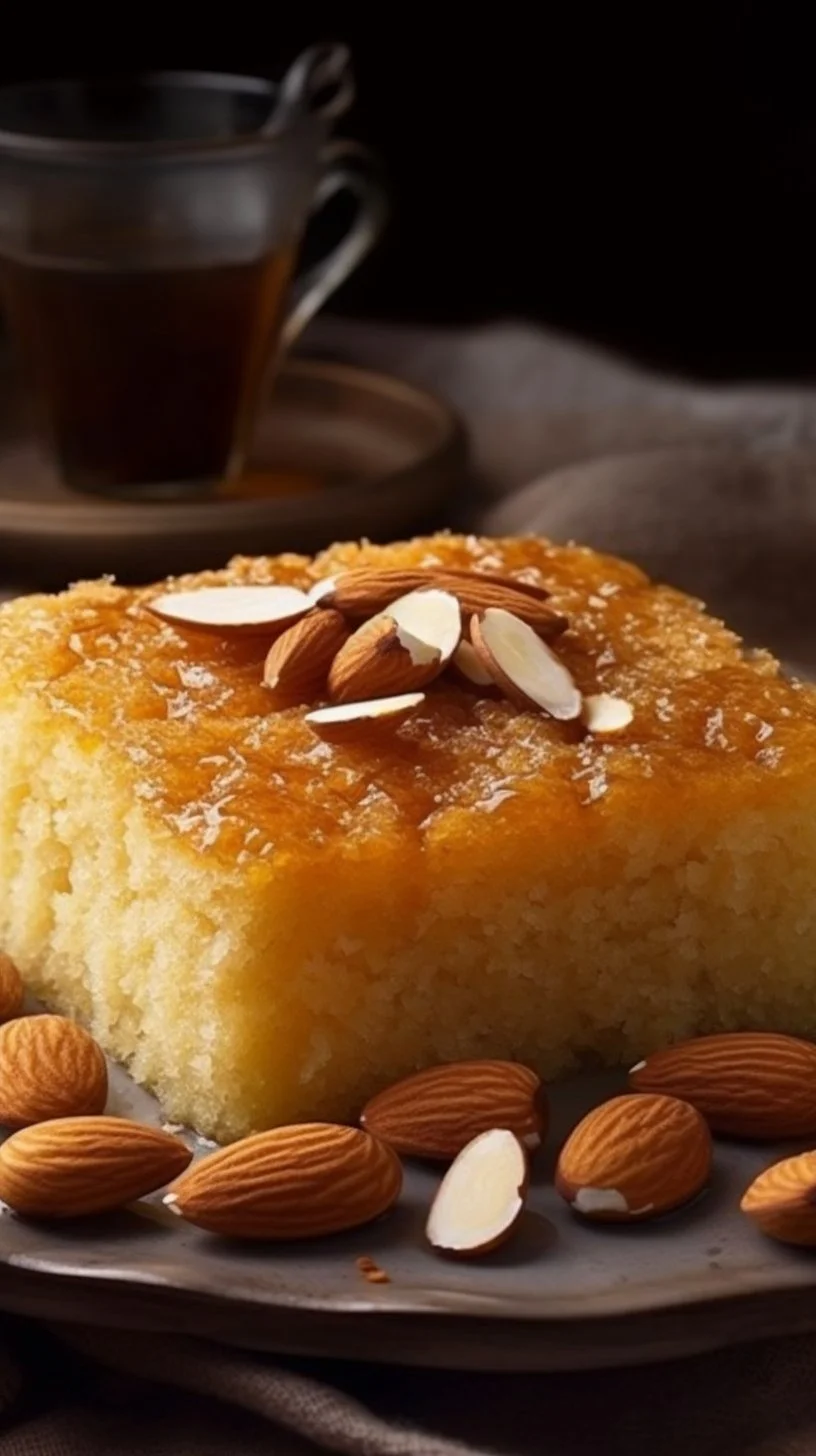
A warm tray of Basbousa arrives like a sun-warmed memory: coarse semolina turning tender beneath a whisper of syrup, almonds like quiet punctuation. The scent is floral and honeyed, the texture both grainy and yielding — a simple pleasure that asks only patience.
Why make this recipe
Basbousa is a small, ceremonial act of hospitality. It requires few ingredients but rewards generosity: a cake that is rustic in its grain, elegant in its syrup, and perfect for sharing with tea, coffee, or conversation. It teaches the baker to balance texture and sweetness, to coax moisture into crumb.
How to make Basbousa
Begin with rhythm and attention. Measure the semolina, sugar, and coconut; allow the melted butter and yogurt to come together into a silky batter that still carries the pleasant grain of semolina. Press it into a prepared pan, score with a knife so each piece knows its place, and crown each square with an almond. Bake until the surface takes on a golden patience; finish by bathing the hot cake with cooled syrup so every crumb can drink.
Ingredients:
- 2 cups semolina
- 1 cup sugar
- 1 cup yogurt
- 1/2 cup butter, melted
- 2 tsp baking powder
- 1/4 cup desiccated coconut
- 8 to 10 almonds for topping
- 1 cup sugar (for syrup)
- 1 cup water
- 1 tsp lemon juice
- 1 tsp rose water or orange blossom water (optional)
Directions:
Preheat oven to 180C (350F) and grease a 9×9 inch (23×23 cm) baking dish. In a bowl, mix semolina, sugar, coconut, and baking powder. Add melted butter and yogurt, stir until smooth. Pour the mixture into the baking dish and level the surface. Score into squares and place an almond on each. Bake for 30 to 35 minutes until golden. Prepare syrup: Boil sugar and water for 5 to 7 minutes, add lemon juice and optional rose/orange water, remove from heat. Pour cooled syrup over hot Basbousa and let it absorb. Cut along scored lines and serve.
How to serve Basbousa
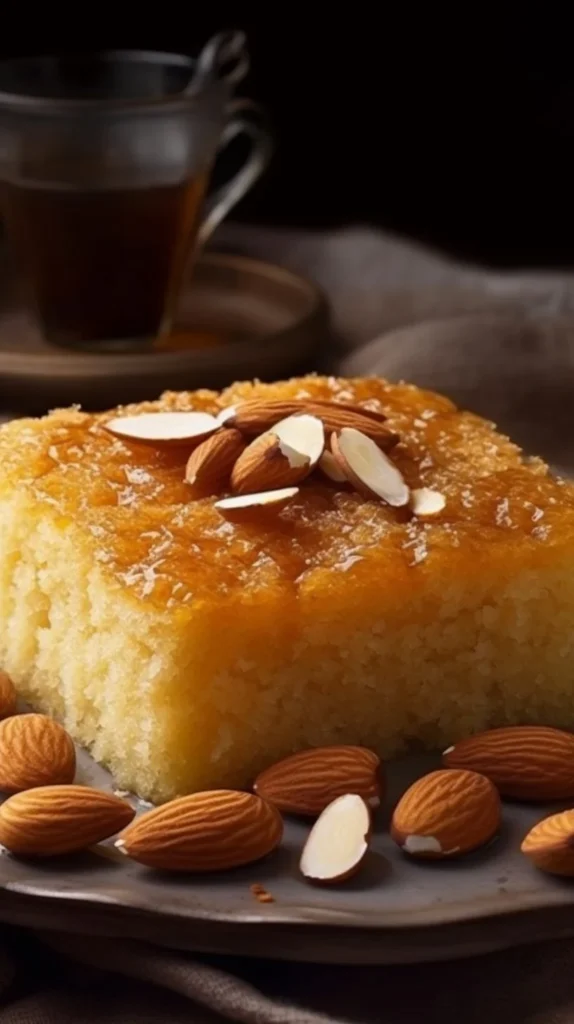
Serve Basbousa warm or at room temperature, each square glistening where syrup has seeped into the grains. Pair with strong black tea, cardamom coffee, or a glass of chilled milk. For a more indulgent presentation, add a spoonful of thick cream or a scattering of toasted coconut alongside.
How to store Basbousa
Keep Basbousa covered at room temperature for up to 48 hours; the syrup will continue to soften the crumb. For longer storage, refrigerate in an airtight container for up to 5 days — allow it to return to room temperature before serving so the texture relaxes. You can freeze individual squares wrapped tightly for up to one month; thaw slowly in the refrigerator, then bring to room temperature.
Tips to make Basbousa
- Use full-fat yogurt for a richer crumb and better moisture.
- Let the butter cool slightly before adding, so it mixes evenly without cooking the yogurt.
- Score the cake deeply enough to guide clean slicing after syrup absorption.
- Pour cooled syrup over the very hot cake — the contrast is what draws syrup into the semolina.
- If you prefer a lighter crumb, allow the batter to rest 10–15 minutes before baking; semolina will soften and bind more evenly.
Variations (if any)
- Coconut Basbousa: Increase desiccated coconut to 1/2 cup and sprinkle extra on top before baking.
- Almond- or Pistachio-topped: Use blanched almonds, slivered almonds, or chopped pistachios for different textures.
- Orange-blossom or Rose: Emphasize floral notes by adding the optional rose water or orange blossom water to the syrup.
- Yogurt-free (richer): Replace yogurt with buttermilk for a tangy lift; texture will be slightly denser.
FAQs
Q: Can I make Basbousa gluten-free?
A: Traditional Basbousa uses semolina, which contains gluten. For a gluten-free alternative, try a coarse-grind gluten-free semolina substitute such as fine cornmeal blended with a touch of rice flour, but expect a change in texture.
Q: Why is my Basbousa dry after baking?
A: Dryness usually means insufficient syrup or syrup added while the cake was too cool. Ensure the syrup has cooled and the cake is hot so it can absorb; also check that you used full-fat yogurt or adequate butter for moisture.
Q: Can I reduce the sugar in the syrup?
A: You can reduce syrup sugar slightly, but syrup balance is crucial to texture and preservation. If you reduce sweetness, simmer a little longer to achieve the same syrup body, and taste for brightness with the lemon juice.
Q: Is it necessary to score before baking?
A: Yes — scoring defines portions and helps syrup penetrate evenly. It also prevents large cracks and allows you to remove neat squares once the cake has absorbed syrup.
Q: How do I reheat Basbousa?
A: Warm individual squares gently in a low oven (150C/300F) for 5–8 minutes or microwave briefly in short bursts until warm; avoid overheating so the syrup doesn’t separate.
Conclusion
If you wish to explore other takes and background on this beloved semolina cake, a thoughtful reference is Basbousa (semolina cake) – Amira’s Pantry, which captures home-style rhythms and techniques. For another lovingly curated version with notes on variations, see Basbousa (Middle Eastern Semolina Cake) – Fufu’s Kitchen.
Baking Basbousa is an exercise in gentle timing and quiet generosity — a reminder that sweetness deepens when given time and warmth.
Basbousa
Ingredients
Method
- Preheat the oven to 180°C (350°F) and grease a 9x9 inch (23x23 cm) baking dish.
- In a bowl, mix semolina, sugar, coconut, and baking powder.
- Add melted butter and yogurt, stir until smooth.
- Pour the mixture into the baking dish and level the surface.
- Score the mixture into squares and place an almond on each.
- Bake for 30 to 35 minutes until golden.
- Prepare syrup by boiling sugar and water for 5 to 7 minutes.
- Add lemon juice and optional rose/orange water, then remove from heat.
- Pour cooled syrup over the hot Basbousa and let it absorb.
- Cut along scored lines and serve warm or at room temperature.