
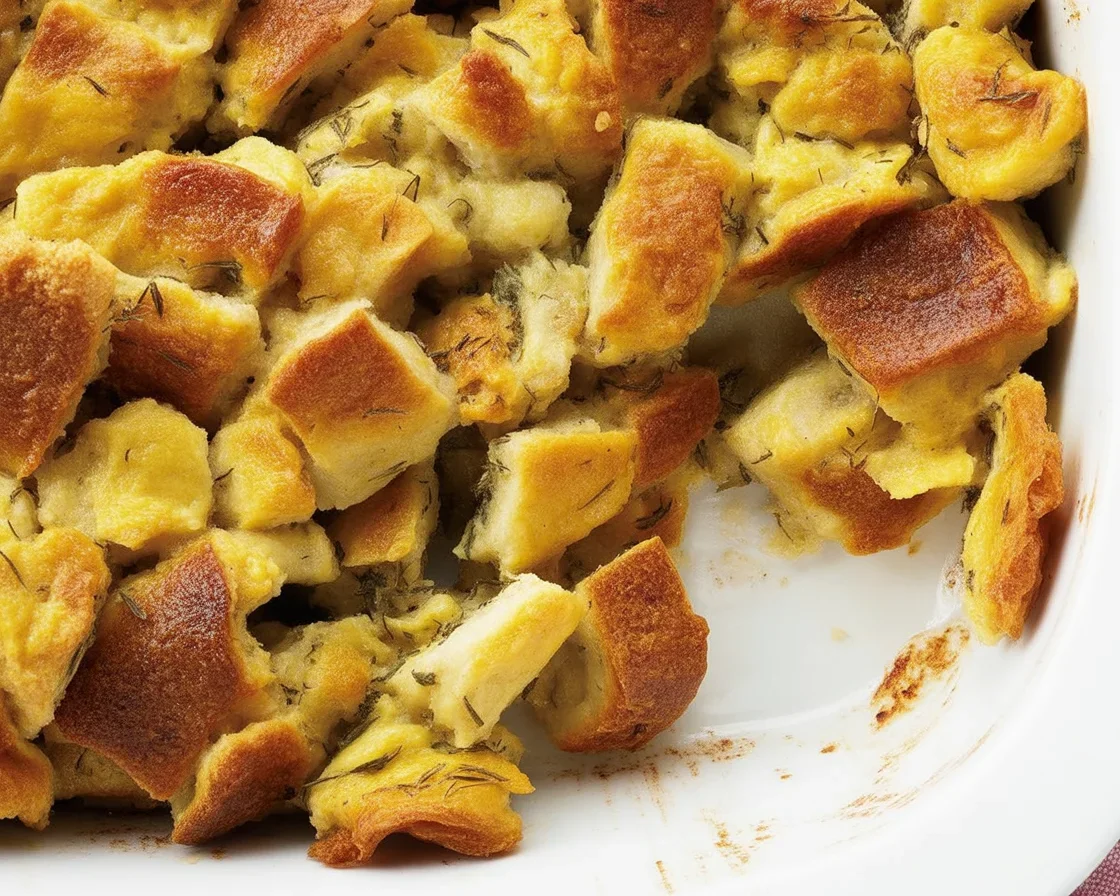
thanksgiving stuffing recipe cravings hit me every time the weather turns cool and the grocery store puts out those big piles of celery and fresh herbs. Maybe you’ve been asked to bring a side, or maybe you’re hosting and want a stuffing that’s both cozy and a little special. I’ve got you. This is the one I make when I want empty pans, happy sighs, and a quiet moment of pride when the table goes still for that first bite. It’s buttery, crisp at the edges, and deeply savory inside. 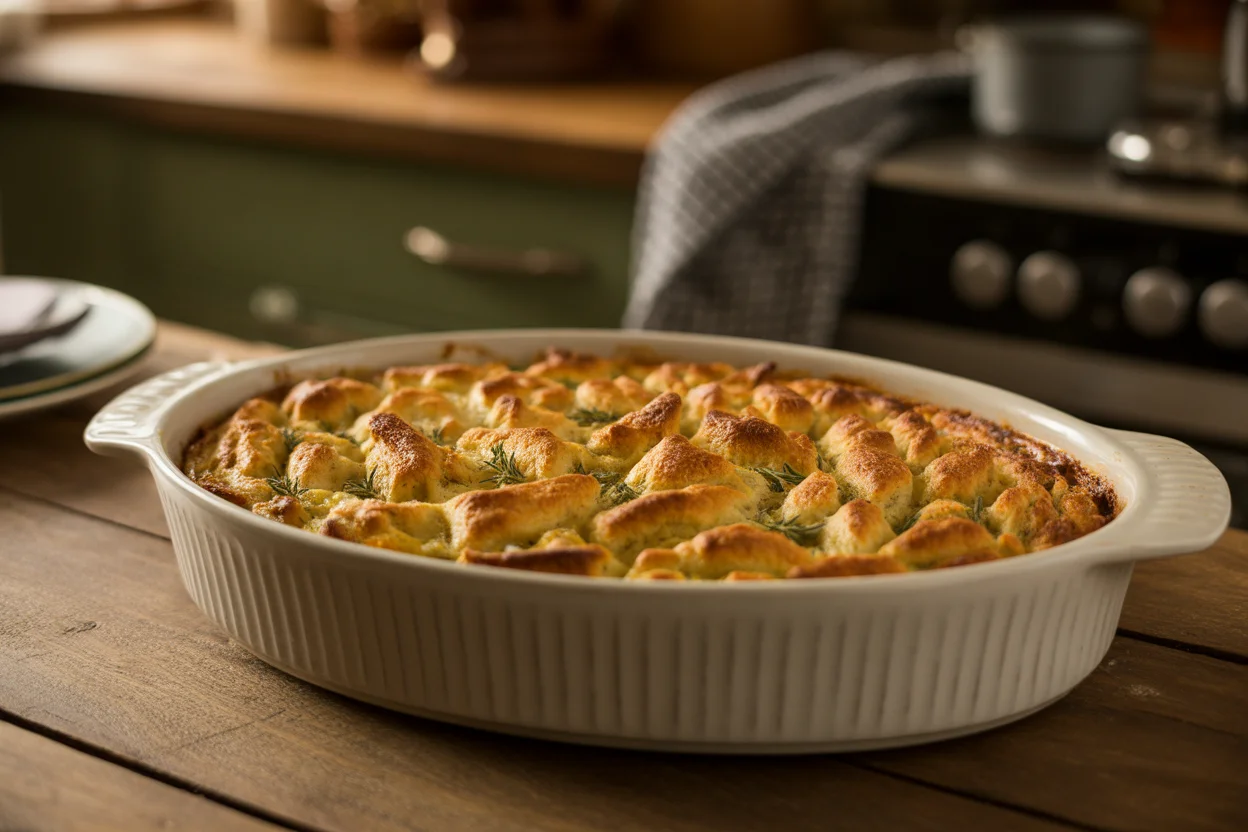
Best Stuffing Recipe!
I’ve tested so many versions, and this is my ride-or-die approach: a gently toasted bread base, a buttery vegetable blend, lots of fresh herbs, and just enough broth to keep things plush without turning soggy. When it’s right, the top crackles softly and the center stays tender, almost custardy, with tiny pops of sweetness from onion and an herby aroma that feels like a hug.
For bread, I like a mix of hearty country loaf and a little brioche to keep things rich. Day-old works best because it soaks up flavor without collapsing. If your bread is super fresh, toast it in the oven first.
Here’s what you’ll need for my best version, scaled to fit a 9-by-13 baking dish that comfortably feeds 8 to 10:
- 1 1/2 pounds day-old bread, cut into 1-inch cubes
- 1 cup unsalted butter (yes, a full cup)
- 2 large onions, diced small
- 4 ribs celery, diced small
- 4 garlic cloves, minced
- 1/2 cup fresh parsley, chopped
- 2 tablespoons fresh sage, minced
- 1 tablespoon fresh thyme, stripped and chopped
- 3 to 3 1/2 cups chicken or vegetable broth, warmed
- 2 large eggs, beaten
- 1 teaspoon kosher salt and 1/2 teaspoon black pepper, plus more to taste
- Optional: 1/2 teaspoon poultry seasoning for extra nostalgia
Why this works: Butter carries the aromatics, fresh herbs add lift, and eggs help bind without making it heavy. Warming the broth makes it absorb more evenly. Salt lightly at each step for clean flavor.
Once you’ve made it this way, you’ll understand why this is my go-to thanksgiving stuffing recipe. 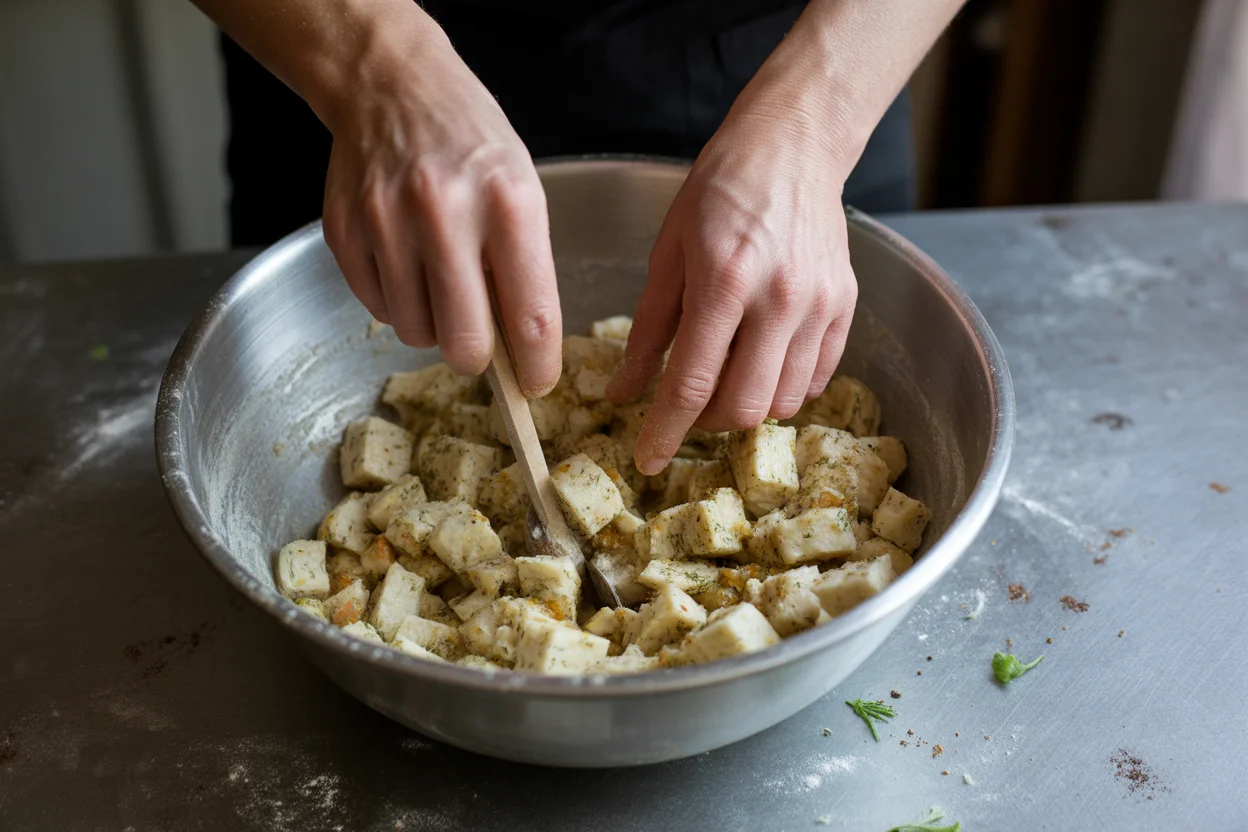
How to Make Stuffing
Here’s the simple, reliable process I use every single year. If you can stir, you can nail this. The most important tip is to taste as you go and trust your senses.
- Prep the bread: Spread the cubes on two sheet pans and toast at 300°F for 15 to 20 minutes, stirring once, until the edges feel dry and lightly golden. Let cool.
- Cook the aromatics: In a large skillet or Dutch oven, melt the butter over medium heat. Add onion and celery with a pinch of salt. Cook 10 to 12 minutes until soft and sweet. Stir in garlic for 1 minute.
- Herb it up: Stir in parsley, sage, and thyme. The pan should smell bright and savory.
- Combine: In a big bowl, toss the toasted bread with the buttery veggies. Add 3 cups warm broth and toss again. The bread should feel moist but not soggy. Add the eggs and toss once more.
- Season: Add salt and pepper. Taste a piece of bread. If it tastes flat, add a pinch more salt.
- Bake: Pile the mixture into a buttered 9-by-13 dish. Cover with foil and bake at 350°F for 30 minutes. Uncover and bake 20 to 30 minutes more until the top is crisp and golden and the center is set.
- Serve: Let it rest 10 minutes so the center settles. It slices nicely but still feels cozy and soft.
Make-ahead note: You can assemble this up to one day in advance and bake just before serving. If you’re coordinating gravy, try my kitchen-saver method and set aside time for make-ahead turkey gravy so your oven schedule stays friendly.
With the basics down, you can rerun this how-to for any thanksgiving stuffing recipe variation you dream up. 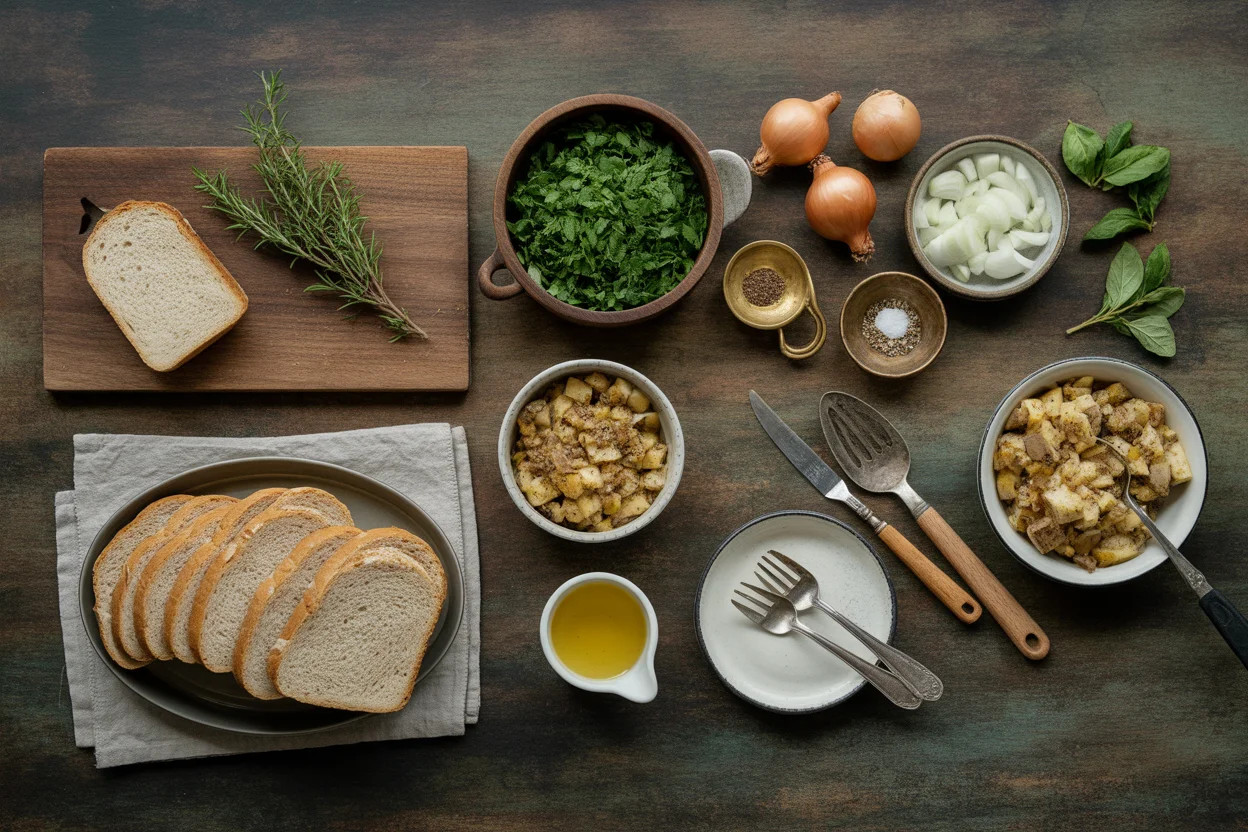
Stuffing Recipe Variations
Once you’ve got the foundation, you can riff depending on who’s coming to dinner and what they crave. Here are my favorite twists that still feel classic, not chaotic.
Classic Herb and Butter
Keep everything as written but amp up the herbs if you love that garden-fresh vibe. A splash of cream or a handful of Parmesan will add a subtle roundness. I do this when I want a pure, bright, herby stuffing.
Savory Sausage and Apple
Brown 1 pound of mild Italian sausage and fold it in with the bread. Add 1 diced apple for gentle sweetness and a handful of chopped fennel fronds if you have them. Keep the rest the same. The sausage fat adds richness, so you can reduce butter by a few tablespoons if needed.
Mushroom and Leek
Sauté 1 pound sliced mushrooms in butter with a pinch of salt until they give up their liquid and caramelize. Swap leeks for onions for a mellow flavor. This version feels earthy and luxe, especially with a splash of dry white wine in the pan before adding mushrooms.
Gluten-Free Comfort
Use your favorite gluten-free loaf, toasted well, and check salt in the broth to keep control. Everything else stays the same. This brings back that same joyful bite for gluten-free guests without extra fuss.
“This stuffing was the star of our potluck. Crispy, buttery, and not mushy at all. Even my picky uncle asked for seconds, which never happens.”
These are all anchored to the same trustworthy method, so you don’t have to overthink it. Choose one that matches your table, or mix ideas. Either way, your thanksgiving stuffing recipe will still hit that golden-top, tender-center sweet spot.
Storage and Make-Ahead Tips
Thanksgiving is a timing puzzle, so here’s how I keep stress low. Assemble the stuffing the day before. Cover tightly and refrigerate. When you’re an hour out from serving, pull it from the fridge to lose the chill while the oven heats. Bake covered, then uncovered, as written. If it was very cold going in, add 5 to 10 minutes.
Leftovers keep well for 3 to 4 days in the fridge. Reheat covered at 325°F with a splash of broth until warmed through, then uncover for a few minutes to re-crisp the top. You can also freeze unbaked stuffing for up to a month. Thaw overnight in the fridge and bake as usual. Fully baked stuffing can be frozen too, then reheated covered with a little broth to bring back the moisture.
Food safety note: Whether you bake it in a dish or in a bird, the center should reach 165°F. I personally bake stuffing in its own pan so the top stays crisp and my roast turkey cooks evenly. It also frees you up to focus on carving and gravy without worrying about the middle of the pan being underdone.
For a smoother plate-up, scoop the stuffing and snug it near the turkey slices, then spoon gravy around the edges, not over the crisp top, so you keep that dreamy texture. Your thanksgiving stuffing recipe will still soak up goodness without losing crunch.
What to Serve With Stuffing
Stuffing is the ultimate team player. It loves savory gravy, bright cranberry sauce, and a juicy main. I like to think about texture and color when building the plate. This stuffing brings rich, buttery comfort, so match it with something tart and something green to balance things out.
Here’s my go-to lineup: crisp-tender green beans with lemon, a fresh salad with shaved fennel, mashed potatoes for the fluffy factor, and a zingy sauce like homemade cranberry sauce to cut through the richness. If you’re doing a plant-forward table, pair it with roasted squash and a simple mushroom gravy. It all plays nicely together without fighting for the spotlight.
If you want one extra flourish, warm a little butter with minced sage and spoon it over the top just before serving. The aroma alone makes people drift toward the table, and it tastes like the holidays in the best way.
Common Questions
Q: Can I use boxed bread cubes?
A: You can, but I prefer fresh or bakery bread for better texture and flavor. Toasting your own cubes makes a real difference.
Q: How do I keep stuffing from getting soggy?
A: Add broth gradually. You want moist, not drenched. Squeeze a cube. If it holds shape with no pooling liquid, you’re good.
Q: Can I make stuffing vegan?
A: Yes. Use olive oil or vegan butter, vegetable broth, and skip the eggs. Add a bit more broth and bake until set with a crisp top.
Q: Should I bake stuffing in or out of the turkey?
A: I prefer out of the bird for texture control and food safety. If you do stuff the turkey, make sure the center hits 165°F.
Q: What if my stuffing top browns too fast?
A: Tent with foil until the center catches up. Remove near the end to re-crisp.
Ready to Bake and Share?
Okay, you’re set. You’ve got a reliable method, flexible variations, and the kind of practical tips that make the day smoother. Keep the top crisp, the middle tender, and the herbs fresh and bright. That’s the heart of a truly great thanksgiving stuffing recipe, and it’s the kind of side that makes people nudge for seconds with a smile.
If you want more inspiration, I love this buttery herb take from Best Stuffing Recipe – Our Favorite Buttery Herb Stuffing, the veggie-forward twist from Best Stuffing Recipe – Love and Lemons, and the smart, step-by-step guide from Thanksgiving Stuffing Recipe (1,000 Times Better Than Boxed) | The …. Bake it, share it, and enjoy the quiet joy that comes from a pan that returns to the kitchen scraped clean. 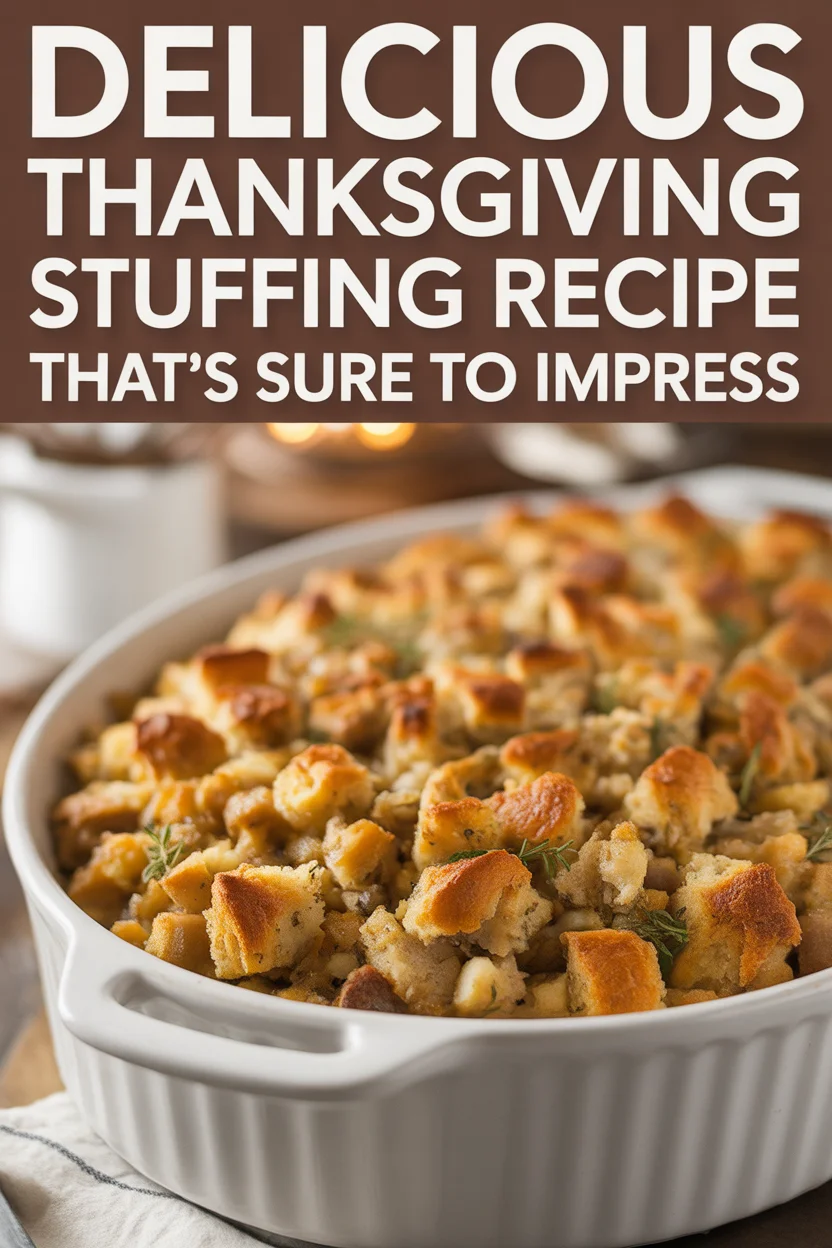
Thanksgiving Stuffing
Ingredients
Method
- Spread the bread cubes on two sheet pans and toast at 300°F for 15 to 20 minutes, stirring once, until the edges feel dry and lightly golden. Let cool.
- In a large skillet or Dutch oven, melt the butter over medium heat. Add the diced onion and celery with a pinch of salt. Cook for 10 to 12 minutes until soft and sweet. Stir in minced garlic for 1 minute.
- Stir in parsley, sage, and thyme into the skillet. The pan should smell bright and savory.
- In a big bowl, toss the toasted bread with the buttery vegetable mixture. Add 3 cups of warm broth and toss again. The bread should feel moist but not soggy.
- Add the beaten eggs and toss once more to combine.
- Season with salt and pepper. Taste a piece of bread. If it tastes flat, add a pinch more salt.
- Pile the stuffing mixture into a buttered 9-by-13 dish. Cover with foil and bake at 350°F for 30 minutes. Uncover and bake for another 20 to 30 minutes until the top is crisp and golden and the center is set.
- Let it rest for 10 minutes before serving.