
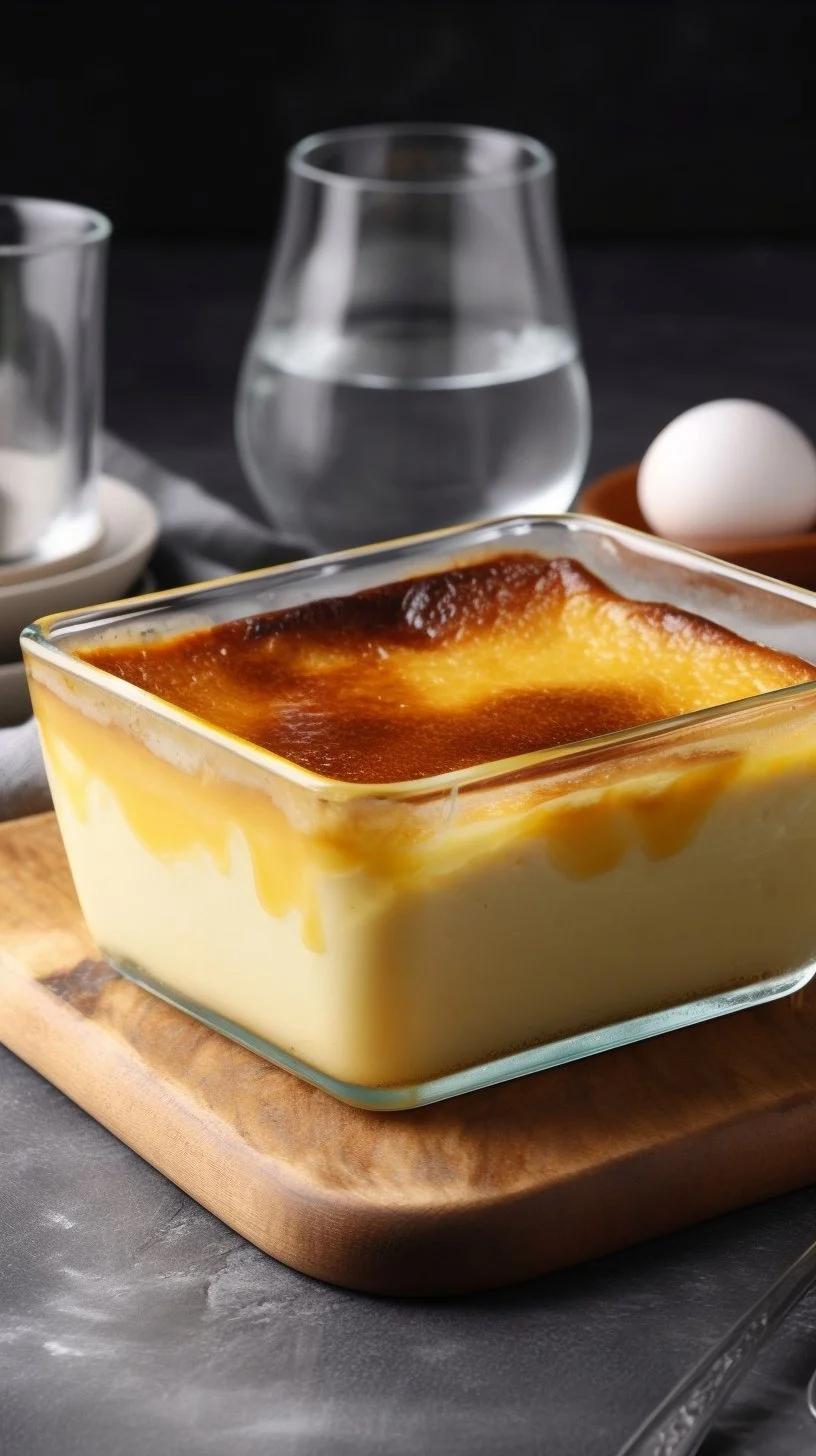
A warm, trembling custard that smells of vanilla and late afternoons — simple, quiet, and soul-soothing.
Serve it alongside a feather-light cake for contrast; I love it with a beautiful pink angel food cake for a balance of silk and air.
Why make this recipe
This is a recipe for patience rendered edible: few ingredients, maximum tenderness. It translates the hum of a kitchen into something that melts on the tongue — a reminder that ceremony need not be complicated. If you collect small baking rituals, you may find more like this among the sides, sauces & baking that shape a quiet repertoire.
How to make Milk Eggs
The alchemy here is temperature and timing: hot milk tempered into beaten eggs creates a custard that sets with a whisper, not a crack. Use the vanilla as an aromatic spine; let the milk steam until it just sighs, not boils. Pour slowly, stir gently, and let the water bath guard the ramekins as they bake — the result is a tender, satiny Oeufs au lait that holds its shape but yields under the spoon.
Ingredients:
1 L milk, 4 eggs, 100 g sugar, 1 vanilla bean or 1 teaspoon vanilla extract, A pinch of salt, Optional caramel
Directions:
Preheat oven to, 160 C. Slit the vanilla bean and heat the milk with the vanilla until simmering, then remove from heat. In a bowl, beat the eggs with the sugar and a pinch of salt. Remove the vanilla bean from the milk. Slowly pour the hot milk over the eggs, stirring continuously. Divide the mixture among ramekins. Place the ramekins in an ovenproof dish and pour hot water halfway up the sides bain marie. Bake for 35 to 40 minutes until the Oeufs au lait are set. Let cool before serving. For a richer taste, replace part of the milk with cream. Add caramel to the bottom of the ramekins for a caramel version. Keeps 2 to 3 days in the refrigerator.
How to serve Milk Eggs
Serve chilled or at cool room temperature. A shallow spoon will gather both custard and any caramel at the bottom; the contrast between the creamy bulk and the glossy caramel is where the pleasure lives. Dust with finely grated citrus zest for brightness, or lay a single toasted almond on top for a brittle counterpoint.
How to store Milk Eggs
Cover each ramekin or place them in an airtight container and refrigerate. They keep best for 2 to 3 days; beyond that the texture gently collapses and the floral notes of vanilla fade. If transporting, stabilize the ramekins in a shallow, padded box to protect their delicate wobble.
Tips to make Milk Eggs
- Temper with care: pour the hot milk in a slow stream while whisking to avoid curdling; the rhythm matters as much as the heat.
- For silkier richness, substitute 100–200 ml of the milk with cream; the mouthfeel deepens.
- If you love the slow burn of salted caramel, prepare an easy salted caramel sauce ahead and spoon a little into the bottom of each ramekin before adding the custard.
Variations (if any)
- Caramel: a spoon of caramel at the bottom gives a brûlée-like sweetness.
- Half-and-half: replacing some milk with cream yields a more luxurious texture.
- Infusions: steep a strip of lemon peel or a star anise with the milk for subtle aromatic twists.
FAQs (minimum three FAQ)
Q: Can I use powdered vanilla or extract instead of a bean?
A: Yes — 1 teaspoon of vanilla extract will do. The bean offers flecks and depth, but extract keeps the process swift.
Q: How do I know the custard is set?
A: The center should tremble slightly when you jiggle the ramekin; it will continue to set as it cools. Avoid baking until completely firm, or the texture will be dry.
Q: Can this be baked at a different temperature?
A: 160°C is gentle and reliable. Slightly higher temperatures speed baking but risk a grainier texture. If you must increase heat, reduce baking time and watch closely.
Q: Is bain-marie necessary?
A: The water bath moderates heat and prevents edges from overcooking; it is recommended for the silkiest result.
Q: How long can I leave them at room temperature?
A: Do not leave custard more than two hours at room temperature for food safety; otherwise, refrigerate promptly.
Conclusion
For a nostalgic, family-inspired approach to this classic, you might enjoy the gentle home recipes found in Œufs au lait de beau-papa – Surprises et Gourmandises, and for a slightly retro perspective with lovely variations see Œufs au lait (un brin rétro) – Au Fil du Thym.
Baking teaches us that time, like heat, is an essential ingredient — patience turns the everyday into something quietly luminous.
Oeufs au Lait
Ingredients
Method
- Preheat oven to 160°C.
- Slit the vanilla bean and heat the milk with the vanilla until simmering, then remove from heat.
- In a bowl, beat the eggs with the sugar and a pinch of salt.
- Remove the vanilla bean from the milk.
- Slowly pour the hot milk over the eggs, stirring continuously.
- Divide the mixture among ramekins.
- Place the ramekins in an ovenproof dish and pour hot water halfway up the sides (bain marie).
- Bake for 35 to 40 minutes until the Oeufs au lait are set.
- Let cool before serving.